01
Multi Frame Rendering
More cores can now matter.
After Effects can render several frames at the same time, so it makes much better use of multiple CPU cores than older versions did.
Spend less time waiting for frames. More time creating them.
After Effects is one of those applications where simply buying more computer doesn't necessarily create a better workstation.
CPU speed matters. Multi Frame Rendering can use additional cores. RAM keeps complex projects moving. A fast NVMe cache now plays a much bigger role in previews. And if you're moving into Advanced 3D, the GPU suddenly becomes far more important.
The right After Effects PC balances all of them around the work you actually create.
A lot of After Effects buying advice was written for a different version of the software. Three changes in particular alter how we'd configure a workstation today.
01
More cores can now matter.
After Effects can render several frames at the same time, so it makes much better use of multiple CPU cores than older versions did.
02
The cache drive steps up.
Since After Effects 25.2, a fast NVMe disk cache can extend preview playback beyond what fits in RAM, so long previews no longer depend on enormous memory capacities alone.
03
The GPU moves up the list.
The Advanced 3D Renderer, 3D models, lighting and shadows lean on the graphics card far more heavily than traditional 2D compositing does.
The software changed.
So should the workstation.
A huge Threadripper, 512GB of RAM and an RTX 5090 might look fantastic on a specification sheet. That doesn't mean every After Effects user needs them.
For many motion designers we'd rather build around a very fast modern CPU, 64GB or 128GB of RAM, one strong NVIDIA GPU, fast project storage and an extremely fast NVMe cache.
Then we scale individual components where the workflow genuinely demands it.
See what makes After Effects fastAfter Effects performance is a balancing act.
Fast cores. Enough of them.
CPU performance remains one of the biggest factors in overall After Effects performance. Most of the work of building each frame still happens on the processor.
Modern After Effects can make substantially better use of multiple cores through Multi Frame Rendering. That doesn't mean the processor with the largest possible core count is automatically best. Clock speed, architecture, core count and the resources available to each simultaneously rendered frame all matter.
Current independent testing shows high end AMD Ryzen 9 and Intel Core Ultra processors delivering excellent After Effects performance. AMD Threadripper becomes more interesting when you need very high RAM capacity, exceptionally heavy Multi Frame Rendering, other heavily threaded applications or workstation expansion.
64GB is a very different proposition today.
After Effects used to hold rendered preview frames almost entirely in system memory, which is why demanding users were once pointed towards 128GB, 256GB or even 512GB.
High Performance Preview Playback changed that. Fast disk cache can now extend previews beyond what fits in RAM, so a modern workstation doesn't automatically need enormous memory just to play back longer previews.
RAM still matters. Complex compositions, high resolution work, Multi Frame Rendering and other Adobe applications open alongside After Effects all raise the requirement, and that's where 128GB or more earns its place.
It depends what you're rendering.
For traditional 2D After Effects work, moving from a good modern graphics card to an extremely expensive flagship usually produces relatively modest gains.
GPU importance rises with GPU accelerated effects, Multi Frame Rendering, heavy VRAM use, the Advanced 3D Renderer, 3D objects, lighting and shadows, certain plug ins, and wider Premiere Pro, DaVinci Resolve or AI workflows.
Current independent testing shows NVIDIA performing particularly strongly in Advanced 3D, so a modern NVIDIA GeForce RTX card is our default for a professional After Effects workstation unless a specific workflow gives us a reason to choose differently.
VRAM matters too. Multi Frame Rendering and 3D work may process several frames at once, and each needs room in GPU memory.
Buy the GPU your workflow needs. Not the biggest GPU available.
How much VRAM do you need?Cache isn't an afterthought anymore.
With High Performance Preview Playback, After Effects can lean heavily on its disk cache for rendered preview frames. The speed of that drive now shapes how responsive previews feel.
We give the cache its own fast NVMe drive, separate from Windows and your projects, so temporary high write activity stays away from important source files. Projects and footage get fast NVMe storage of their own.
Multi Frame Rendering allows After Effects to render several frames at the same time instead of processing every frame one after another.
Older advice often said After Effects doesn't really use lots of cores. That's now too simplistic. But extra cores alone don't tell the whole story, because every frame being worked on at once needs its own share of CPU time, system memory, GPU processing and VRAM.
Sequential
Each frame waits for the last.
The whole workstation serves a single frame, then moves on to the next. Fast individual cores matter most here.
Multi Frame Rendering
Each frame needs its own share.
More cores let After Effects start more frames together, but only if there's enough RAM, GPU time and VRAM to feed every one of them.
The fastest CPU can't render multiple frames effectively
if the rest of the workstation can't feed it.
After Effects traditionally relied on RAM to hold rendered preview frames, so longer previews meant buying more and more memory.
High Performance Preview Playback lets modern After Effects use fast disk cache to extend preview playback beyond what fits in RAM. A fast NVMe SSD can now carry longer previews without pushing every user onto a workstation platform purely to reach huge memory capacities.
Old thinking
Memory was the only lever.
Longer, higher resolution previews simply demanded more system memory, which pushed demanding users towards very large and very expensive memory configurations.
Modern After Effects
Longer, responsive previews.
Recently rendered frames stay in memory while a fast NVMe cache holds the rest, so preview length is no longer tied purely to how much RAM you can install.
Don't build a modern After Effects PC around CPU and RAM alone.
Cache performance now deserves a seat at the table.
64GB is a strong starting point for a professional modern After Effects workstation, while 128GB is better suited to heavier 4K+, complex or multitasking workflows.
Adobe's official requirements are lower than these recommendations, and that's fine. Adobe tells you what will run After Effects. We're interested in what will run your After Effects workflow well. Every tier here assumes a fast dedicated NVMe cache alongside it.
Professional starting point
Heavy creative sweet spot
Specialist
More RAM still helps heavy projects.
A fast cache now helps everyone.
Multi Frame Rendering can process several frames at once, which raises the potential demand on GPU memory. Too little VRAM limits how aggressively After Effects can work, and Advanced 3D pushes the requirement higher again.
Adobe currently recommends 8GB of GPU memory. For a new premium workstation, we'd generally aim higher.
Practical minimum
Strong professional territory
Heavy 3D / specialist
Standard motion graphics doesn't need 32GB of VRAM.
Buy the GPU your workflow needs.
System, projects, cache and archive each have a different job.
System
Projects / media
CacheThe important one
Archive
A fast dedicated NVMe cache can dramatically improve how modern After Effects handles rendered preview frames, and keeping it separate from your projects keeps constant high write activity away from important source data. The right capacity depends on your resolution and composition lengths, so treat 1TB to 2TB as a starting point rather than a rule.
Working from external storage? Basic external drives can become a bottleneck and are better suited to transfer, backup and archive. High performance external NVMe and professional network storage are a different proposition. For studios on shared storage the network matters too: Adobe currently recommends 10Gb Ethernet for 4K shared network workflows, and we can help with that side as well.
Finished client work should exist somewhere else too.
The priority order changes with what you're rendering. The stars show where we'd spend the budget for each kind of work. They're a guide to priorities, not benchmark scores.
Traditional 2D
CPU and workflow responsiveness lead.
Motion graphics, titles, compositing and 2D animation. A fast CPU, enough memory and a quick cache drive make the biggest difference day to day.
Priority
Advanced 3D
The graphics card moves centre stage.
3D models, lighting, shadows, environment lights and 3D compositions. Here the GPU and its VRAM deserve considerably more of the budget.
Priority
Mostly 2D? Put the budget into CPU, RAM and storage.
Heavily 3D? Give the GPU more of it.
Two motion designers can both open After Effects every morning and need very different workstations.
2D animation, titles, social graphics, brand animation and lower thirds. Responsiveness while you build and preview matters most.
Priority
Large compositions, masks, tracking, keying, effects and high resolution assets. Memory climbs quickly as compositions grow.
Priority
3D models, lighting, shadows, environment lights and 3D compositions. The priority order flips: the graphics card and its VRAM lead.
Priority
High resolution compositions and larger assets. Composition complexity matters as much as the resolution itself, and every preview frame is bigger.
Priority
A very common professional pairing. Your codecs can change the right CPU choice, and the GPU becomes more valuable once Premiere Pro joins the workflow.
Priority
Higher core count CPUs and GPU performance can become substantially more valuable, depending on how Cinema 4D and its renderer are used. We configure the workstation around both applications.
Priority
In a single day a motion designer might move between After Effects, Premiere Pro, Photoshop, Illustrator, Media Encoder, Cinema 4D, Blender, DaVinci Resolve, Topaz and local AI tools.
That changes workstation requirements considerably.
We don't configure around one benchmark. We configure around your working day.
What resolution do you work at, and how long are your typical compositions? 2D or 3D? Which plug ins and codecs do you use? Do you use Premiere Pro or Cinema 4D too? How large are your project files, and where is your media stored: locally or on a NAS? How many applications stay open at once, and where does your current workstation actually slow you down?
Tell us what your workflow looks like.
After Effects
Reviewed September 2026
Rather than scatter today's model numbers across the guide, we keep them here and review them as new hardware arrives. For a professional After Effects workstation today, we'd typically begin with:
High end AMD Ryzen 9 or Intel Core Ultra processor. Current independent testing shows excellent After Effects performance from both.
AMD Threadripper 9000 where very high RAM capacity, demanding Multi Frame Rendering, other heavily threaded software or workstation expansion genuinely justify it.
NVIDIA GeForce RTX 5080 16GB class for most professional After Effects systems. An excellent current balance.
RTX 5090 32GB class for demanding Advanced 3D, significant VRAM requirements or maximum performance. One GPU, not two.
64GB professional starting point. 128GB is our preferred choice for heavier motion graphics, 4K+, complex projects and substantial multitasking.
256GB+ only when the workflow evidence supports it.
1TB NVMe for Windows and applications. 2TB to 4TB+ NVMe for projects and active media. 1TB to 2TB fast NVMe dedicated to the After Effects cache.
Archive or NAS for completed work and backup. Starting points, not rigid configurations.
We'll move to Threadripper, 256GB+ of memory or an RTX 5090 when the work genuinely calls for it: large VFX pipelines, very high resolution projects, heavy Advanced 3D, or After Effects alongside Cinema 4D and other heavily threaded applications. Never simply because it costs more.
Sonox is a starting platform, not a fixed After Effects specification. After Effects is best served by one strong GPU, so we don't recommend our multi GPU compute systems for After Effects on its own.
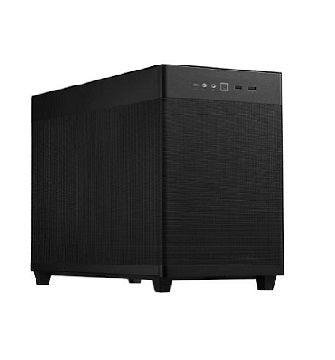
Compact motion design workstation. Motion graphics, 2D animation, general After Effects and Adobe Creative Cloud.
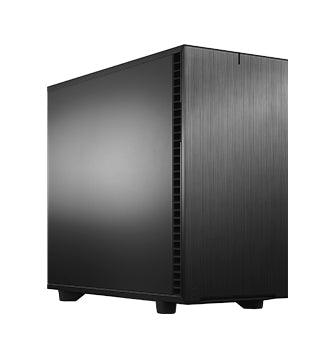
Our creative workstation sweet spot. Professional After Effects, Premiere Pro alongside it, advanced motion design, 4K workflows and powerful single GPU configurations.
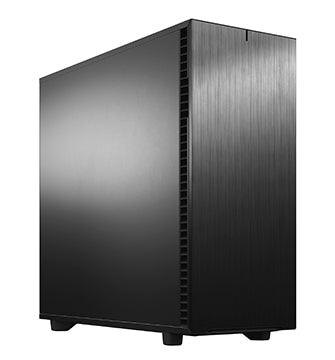
More workstation, when your workflow actually needs more workstation. High RAM requirements, demanding Multi Frame Rendering, large VFX pipelines and heavily threaded applications alongside After Effects.
Not sure which one fits your After Effects work?
Talk to a workstation specialistWhy Utopia
Built around your software: configured around After Effects and the applications surrounding it.
Designed, assembled and tested by our team in Kilmarnock.
Long-term support without labour charges hanging over the workstation.
Speak to real people who understand the system we built.
Rendering and preview workloads can stress a workstation for long periods. Cooling, airflow, power delivery and stability matter.
The best PC for Adobe After Effects combines a fast modern CPU, enough RAM, one strong GPU and fast NVMe storage, particularly for the disk cache.
For most professional users we'd currently start with a high end AMD Ryzen 9 or Intel Core Ultra processor, 64GB to 128GB of RAM, a modern NVIDIA GeForce RTX GPU and a separate fast NVMe cache drive, then tailor the specification around 2D or 3D work, resolution and the rest of your workflow.
The best CPU for After Effects is a fast, modern high end processor, because CPU performance remains one of the biggest factors in overall After Effects performance.
Current high performance AMD Ryzen 9 and Intel Core Ultra processors perform extremely well. AMD Threadripper becomes valuable when you need additional cores for heavy Multi Frame Rendering, very high RAM capacity or workstation expansion. The fastest option changes between processor generations, so we keep our current recommendation up to date rather than declaring one model the best indefinitely.
Yes. Multi Frame Rendering allows After Effects to use multiple CPU cores far more effectively by processing several frames at the same time.
How well it scales still depends on RAM, GPU resources and the rest of the system being able to support those simultaneous frames. More cores help only when the rest of the workstation can keep up.
Both AMD Ryzen and Intel Core Ultra currently offer excellent After Effects options.
The lead changes between processor generations, so we choose the platform around current benchmark data and the other software in your workflow, such as Premiere Pro and the codecs you use.
64GB of RAM is a strong starting point for a professional modern After Effects workstation, while 128GB is better suited to heavier 4K+, complex or multitasking workflows.
256GB or more should be reserved for workflows that genuinely need it, such as extreme compositions, specialist VFX or several memory intensive applications running at once. Adobe's official minimum is lower; these figures are about running a professional workflow well.
For many modern After Effects users, yes, 64GB of RAM is enough.
High Performance Preview Playback means a fast disk cache can now extend preview duration without enormous memory capacities. Heavier users working on complex 4K+ projects, or running Premiere Pro and Photoshop alongside After Effects, can still benefit from 128GB or more.
For complex professional workflows, often yes.
128GB is particularly useful for larger projects, higher resolution compositions, more demanding Multi Frame Rendering and heavy multitasking. It should no longer be treated as mandatory for every professional After Effects user, because a fast NVMe cache now carries much of the preview load.
After Effects needs a good, supported GPU, but how powerful it needs to be depends heavily on your workflow.
Traditional 2D projects remain strongly CPU dependent, and a flagship GPU usually adds limited benefit there. Advanced 3D, GPU accelerated effects and heavier Multi Frame Rendering benefit much more from powerful graphics hardware.
A modern NVIDIA GeForce RTX GPU with plenty of VRAM is currently an excellent choice for After Effects.
Current independent testing puts RTX 5080 16GB class hardware in a particularly strong position for general After Effects work. The RTX 5090 32GB becomes more relevant for maximum performance and demanding Advanced 3D or VRAM heavy projects.
8GB of VRAM is Adobe's current recommended level, but for a new professional workstation we generally favour more headroom.
12GB to 16GB is strong territory for most After Effects users. Heavy Advanced 3D and specialist workflows may benefit from 24GB to 32GB.
Installing multiple GPUs generally doesn't provide meaningful After Effects performance gains.
For almost every After Effects workstation, invest in one appropriate GPU rather than two. Multi GPU systems make sense for GPU rendering and AI compute, not for After Effects on its own.
Yes. A modern After Effects workstation should use fast SSD or NVMe storage.
NVMe is particularly valuable for the disk cache that modern preview playback relies on, as well as for projects and footage.
For a professional workstation, we strongly recommend one.
A dedicated fast NVMe cache drive can improve preview behaviour while keeping temporary, high write cache files away from your projects and the operating system. 1TB to 2TB is a useful starting region, depending on your resolution and composition lengths.
High Performance Preview Playback allows After Effects to use disk cache more effectively for rendered preview frames, reducing its dependence on holding the entire preview in system RAM.
Introduced in After Effects 25.2, it makes fast NVMe storage much more important in modern After Effects workstation design, and means 64GB of RAM goes much further than it used to.
For many traditional 2D After Effects users, probably not.
The RTX 5090 becomes more compelling for Advanced 3D, demanding GPU accelerated workflows, high VRAM requirements or other GPU intensive applications used alongside After Effects. If most of your day is 2D motion graphics, we'd rather put some of that budget into CPU, RAM and storage.
Sometimes. Threadripper can be an excellent choice where heavy Multi Frame Rendering, very high RAM capacity or other heavily threaded applications justify the additional platform cost.
For many After Effects users, high performance mainstream processors offer better overall value.
For 4K After Effects we'd start with a high performance CPU, 64GB to 128GB of RAM, a modern NVIDIA RTX GPU, fast NVMe project storage and a dedicated NVMe cache.
Composition complexity matters as much as resolution. A simple 4K title sequence and a heavily layered 4K composite can need very different workstations, so we configure around the work rather than the resolution alone.
A PC for After Effects and Premiere Pro should be configured for both applications, with 64GB to 128GB of RAM, a strong NVIDIA GPU and fast shared project storage as sensible professional targets.
The right CPU can change depending on the codecs you edit, and the GPU becomes increasingly valuable once Premiere Pro is part of the workflow.
Yes. We configure it around both applications, because Cinema 4D rendering can change the CPU and GPU priorities considerably.
Depending on how you render in Cinema 4D, a higher core count processor or a more powerful graphics card may earn a bigger share of the budget than After Effects alone would justify.
Yes. We can help you plan the whole move to a Windows After Effects workstation, not just the hardware specification.
We'll look at displays, storage, Thunderbolt and connectivity, plug ins, project files, codecs, your Adobe workflow and peripherals, so the new workstation fits the way you already work.